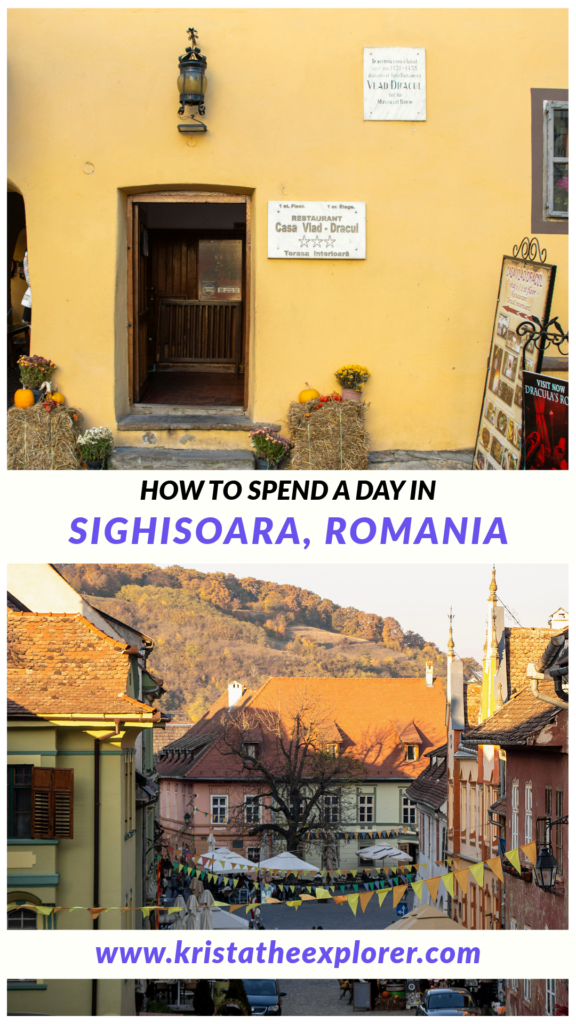
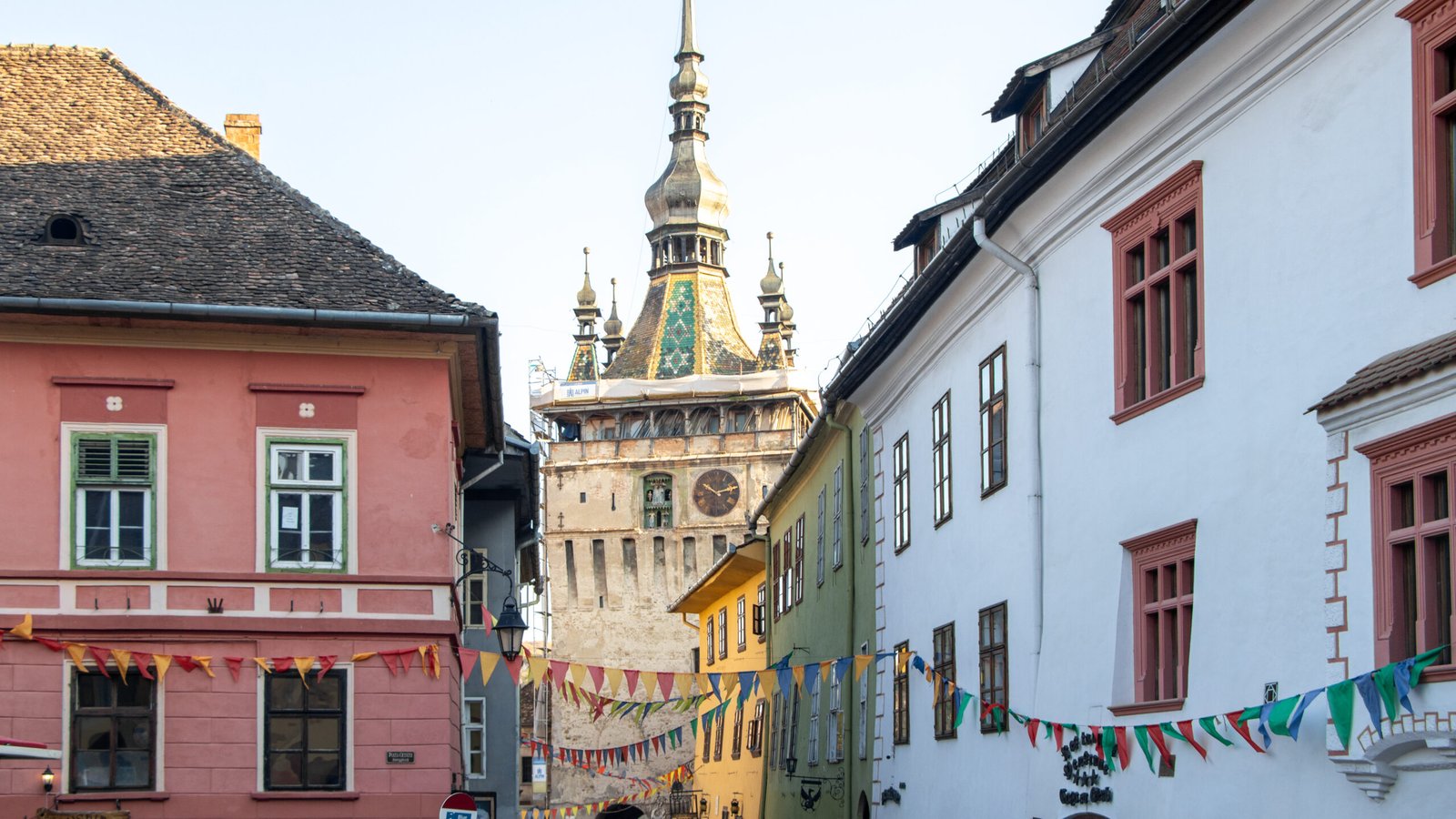
In the heart of Transylvania lies Sighisoara – a city known for its colourful buildings, medieval cobbled lanes, and ties to Dracula. It was founded in the 12th century by Transylvanian merchants and craftsmen, and today the city centre is a UNESCO-listed site due to its beautifully preserved medieval character, towers, and buildings. In the 15th century, Vlad the Impaler was born in Sighisoara, who later famously became associated with Bram Stoker’s Dracula. This unique connection makes it a popular day trip for people visiting the region. You’ll find that many of the best things to do in Sighisoara unveil a history that’s just as interesting as the fictional character.
Whether you’re visiting Sighisoara to simply wander through the streets or you’re interested in historic landmarks, this city deserves a place on your Romania itinerary. Its compact medieval citadel makes it easy to see everything in a day, while combining sightseeing with stops for drinks and photographs.
Staying overnight at one of the hotels in Sighisoara will give you more time to explore the quieter corners and enjoy the old town once the day trippers have left. It’s a good idea to add Sighisoara between visiting Brasov and Sibiu, so you can visit small villages and other historic sites in the area. However you choose to plan your itinerary, you’ll find that there are many things to do in Sighisoara to keep you entertained.
Things to do in Sighisoara
1. Piata Cetatii
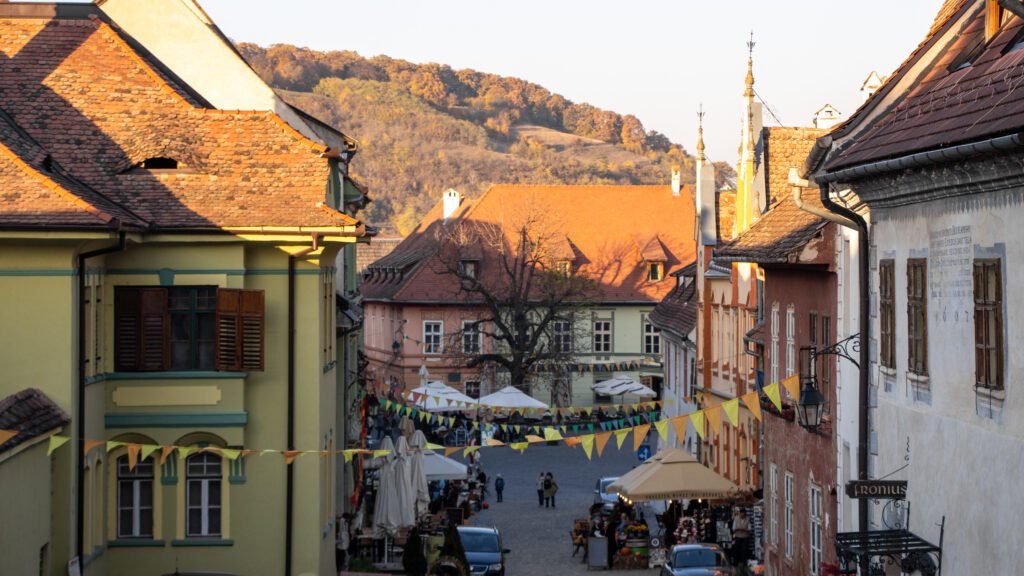
Piata Cetatii, or Citadel Square, is the perfect place to start exploring Sighisoara. It sits in the very centre of the upper town and is surrounded by colourful historic houses, reflecting the wealth of the residents and merchants of the past. The citadel was once a centre of craftsmanship and trade, and you can still see this through many of the cobbled streets leading up to Piata Cetatii. Walking around this square was one of my favourite things to do in Sighisoara because there are so many stunning buildings to photograph, and each one has its own little quirks and architectural details.
Many of the top things to see in Sighisoara are situated near Piata Cetatii, including the famous Clock Tower and the Covered Stairway. Before leaving the square, make sure you don’t miss the Stag House and its unusual design, with a stag’s head coming out of the building. If you’re arriving in Sighisoara early in the morning, this is the perfect time to enjoy Piata Cetatii without the crowds.
2. Casa Vlad Dracul
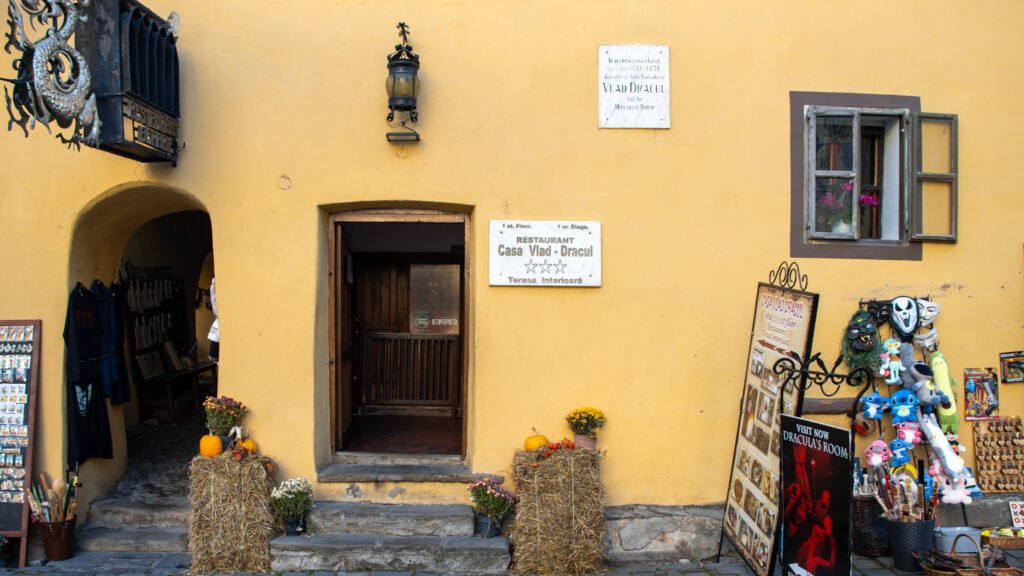
Casa Vlad Dracul is a yellow-painted house traditionally linked with the birth of Vlad the Impaler in 1431. The building is named after his father, Vlad Dracul II, who was based in Sighisoara in the 1430s. It’s one of the oldest surviving medieval houses within the citadel, with parts of it dating back to the 14th century. There’s no evidence to say Vlad the Impaler was actually born here, but its ties to his father make it one of the most unique things to do in Sighisoara.
If you want to go inside Vlad Dracul House, the building now houses a restaurant. You can also pay to go in a Dracula-themed room, but it’s not authentic and is more of a theatrical display, so I wouldn’t recommend wasting your money. I was more interested in seeing the house from the outside, which is very easy to add to your itinerary.
3. The Covered Stairway
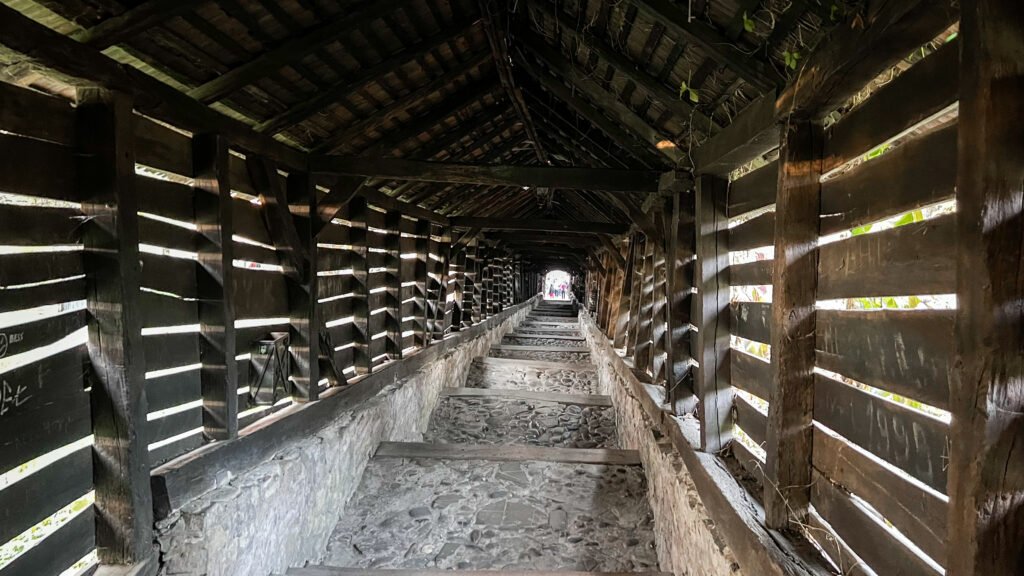
A must-see in Sighisoara is The Covered Stairway. It was built in 1642 to provide shelter for churchgoers and pupils who had to make their way up the hill in snow and rain. It’s often referred to as the Scholars’ Stairs, which links to its connection with the school. The enclosed wooden structure makes it feel like you’re passing through a tunnel rather than walking up steps, and only a bit of daylight creeps through the sides and entrances.
The entrance at the base of The Covered Stairway can be found close to Piata Cetatii, so it’s very easy to add to your list of things to do in Sighisoara. It’s a memorable experience in itself, but it also allows you to visit the Church on the Hill. There are approximately 175 steps to climb, so take it slow, as some of the steps are worn away in certain areas and the interior is quite dim.
4. Get a souvenir from Spoonman’s Shop
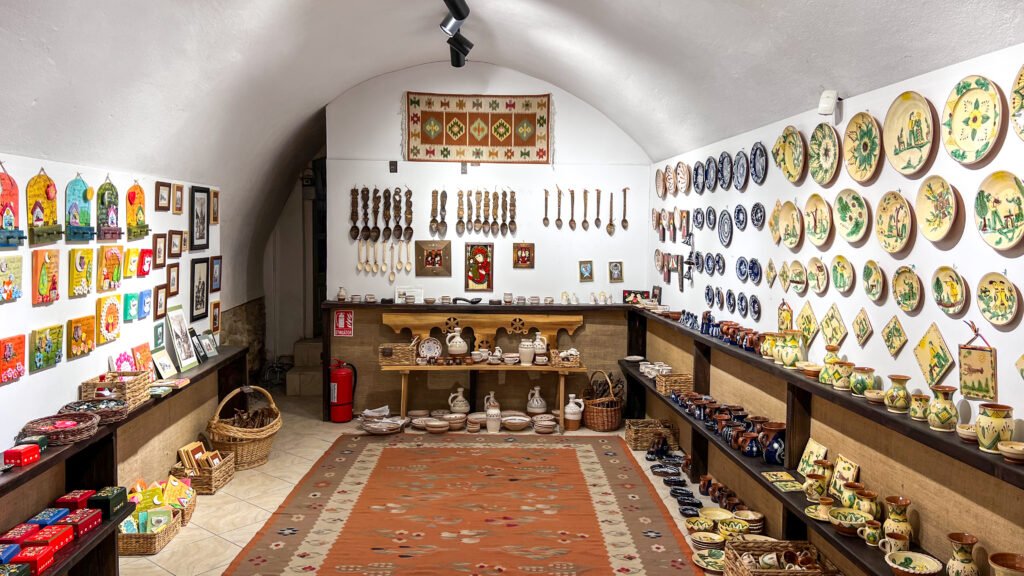
While walking around the citadel, you’ll notice there are numerous souvenir shops. However, most of these shops are selling the same mass-manufactured items. When I’m travelling, I always look for handmade, local artisan shops to support, so I was really pleased to come across Spoonman’s Shop. This shop is known for its hand-carved wooden spoons, but it also sells other traditional Romanian crafts. Wooden spoons are linked to Romanian folk craft and are both decorative and practical household objects.
Each spoon has a different design and story linked to it, so it’s worth spending the time to read about each one before making a purchase. The wooden spoons aren’t the cheapest, but for me, the price was worth it compared to buying something from another souvenir shop.
5. The Clock Tower
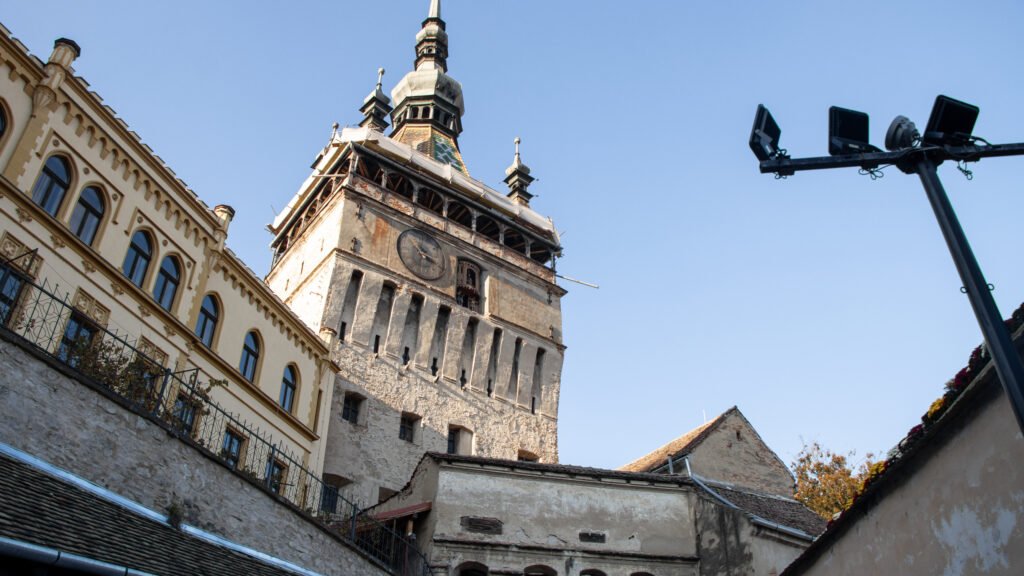
One of the main things to do in Sighisoara is to visit The Clock Tower. It’s the city’s most recognizable landmark, dating back to the 14th century. It was once the meeting place of the town council, and today it houses Sighisoara’s History Museum. In 1676, a devastating fire took place, forcing the city to rebuild it, but this time with an elaborate roof. If you look closely, you can still make out the symbolic characters on the clock.
There’s also a beautiful view over the citadel from the top of the clock tower. Unfortunately, we visited at the end of the day, so the tower was closed, but it’s supposed to be one of the best things to see in Sighisoara, so it’s worth considering adding to your itinerary. I’d also recommend visiting the museum if you have time and are interested in learning more about the city’s history.
6. Find some viewpoints in Sighisoara
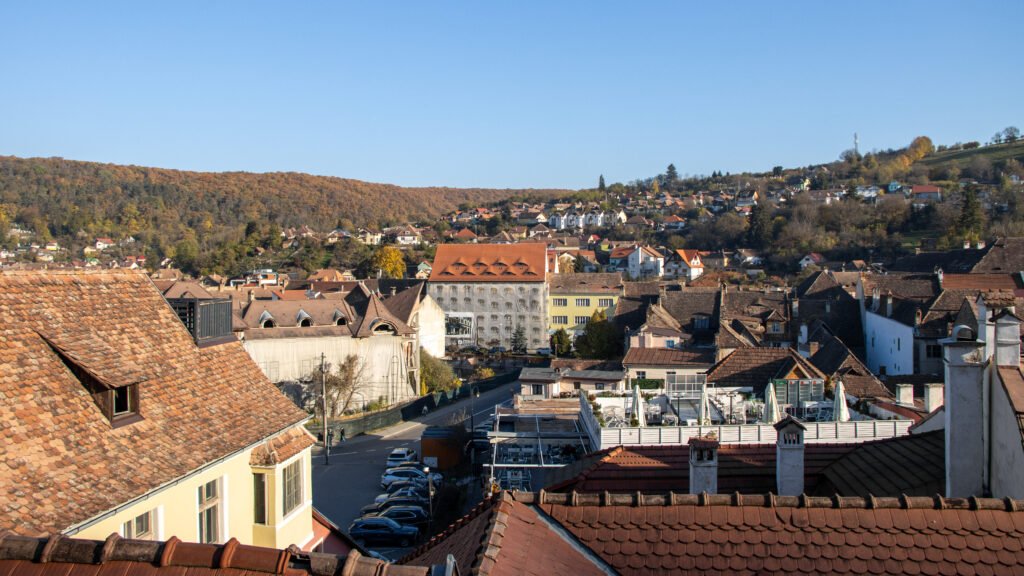
Since Sighisoara’s citadel is located on a hill, there are plenty of opportunities to find viewpoints, especially from the very top, where the citadel is. The Clock Tower is probably the best viewpoint in the upper town, but you’ll find other viewpoints dotted around the old town, giving you a different look over the countryside and the lower town.
The Church on the Hill is a fantastic option, sitting at the top of The Covered Stairway. From here, you can look down between the older buildings and further afield, which is very pretty in the autumn when the leaves are changing colours. From here, you’re not too far from the Ropemaker’s Tower, either.
7. Explore the colourful historic streets
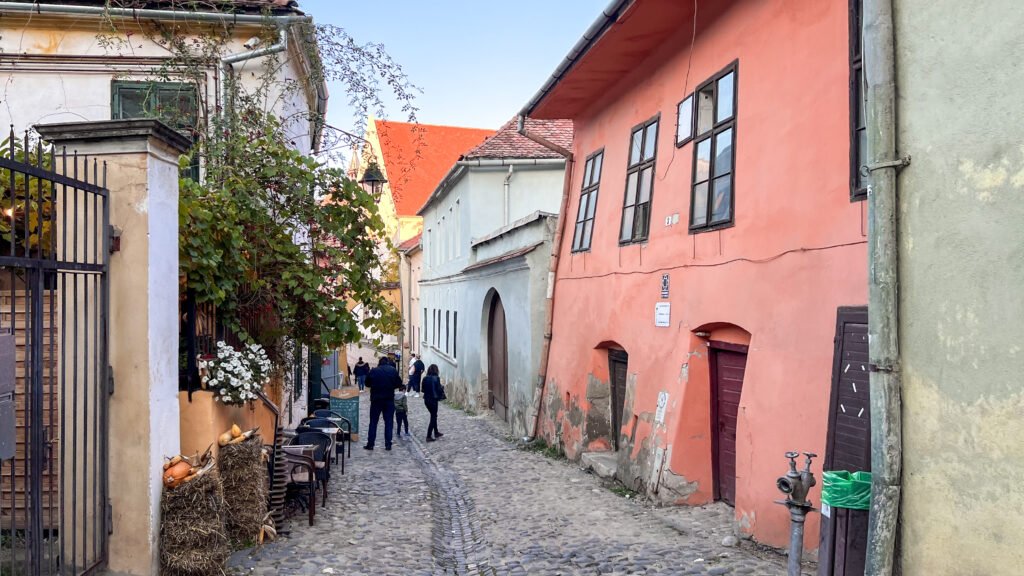
If you’re visiting Romania on a budget, one of the best free things to do in Sighisoara is to explore the colourful historic streets on foot. There are many guided walking tours of Sighisoara that you can join if you’re concerned about missing the key highlights of the city. As you walk around the preserved upper town, you’ll be able to enjoy the layout of the streets and their character, which makes it feel like a small, fortified town. The buildings have, of course, evolved since medieval times, so you can expect to see a mixture of periods reflected in them.
I’d recommend starting at Strada Scolii and making your way to Citadel Square and The Clock Tower. Leave time to explore the smaller lanes off the main streets, because that’s where you’ll find hidden gems and unique photo spots.
8. Statue of Vlad Tepes
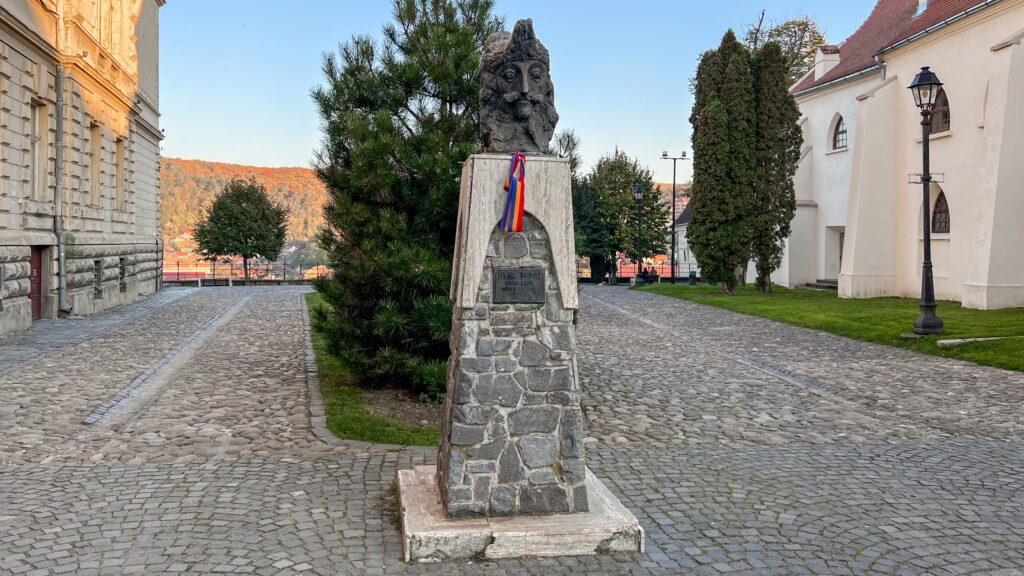
Sitting near the Monastery’s Church is a Statue of Vlad Tepes. While this probably won’t be a highlight among your list of things to do in Sighisoara, it’s an interesting stop that’s surrounded by other key attractions. The monument depicts the bust of the historical ruler whose name became associated with Dracula. It’s a good addition to your itinerary if you’ve already visited Casa Vlad Dracul, as they both link the city to his identity.
Before leaving the area, take a walk over to City Hall, which is another beautiful building to photograph. The Medieval Weapon Museum is also located nearby and may be worth visiting, depending on your interests.
9. Church on the Hill
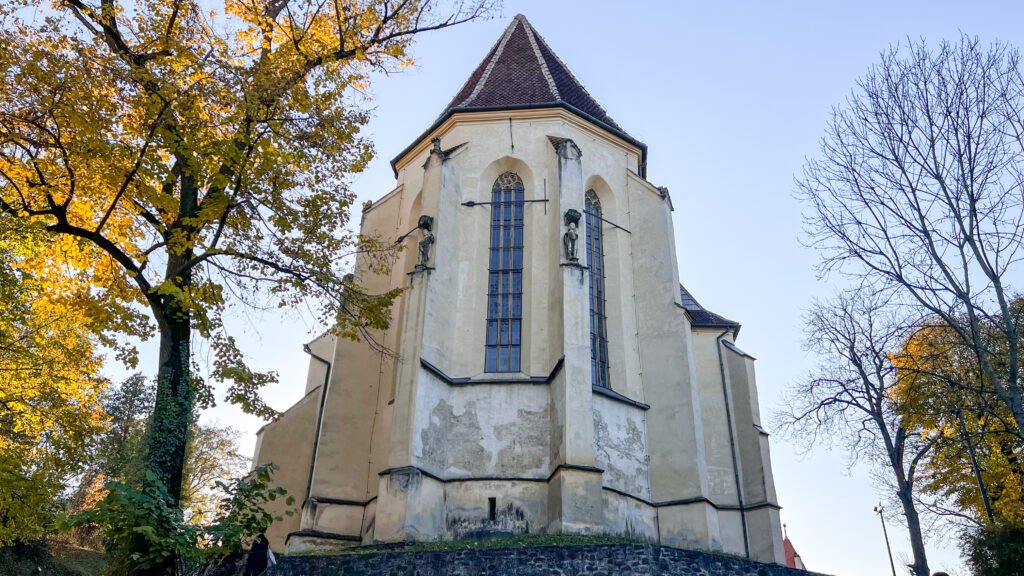
Biserica din Deal, or the Church on the Hill, is an important religious building in Sighisoara. It was first mentioned in 1345, and major Gothic works on it took place in the 15th century. You’ll find this church at the top of The Covered Stairway, and its position above the citadel gives it both a vantage point and a feeling of command. If the doors are open, I’d recommend heading inside, where you can see medieval wall paintings that have been unveiled after being covered by limewash for centuries.
To save time, I’d suggest combining your visit with The Covered Stairway. If you have some extra space in your itinerary, there’s a Saxon cemetery nearby where you can see the connection the city has with its German-speaking community.
10. Locate the different towers in Sighisoara
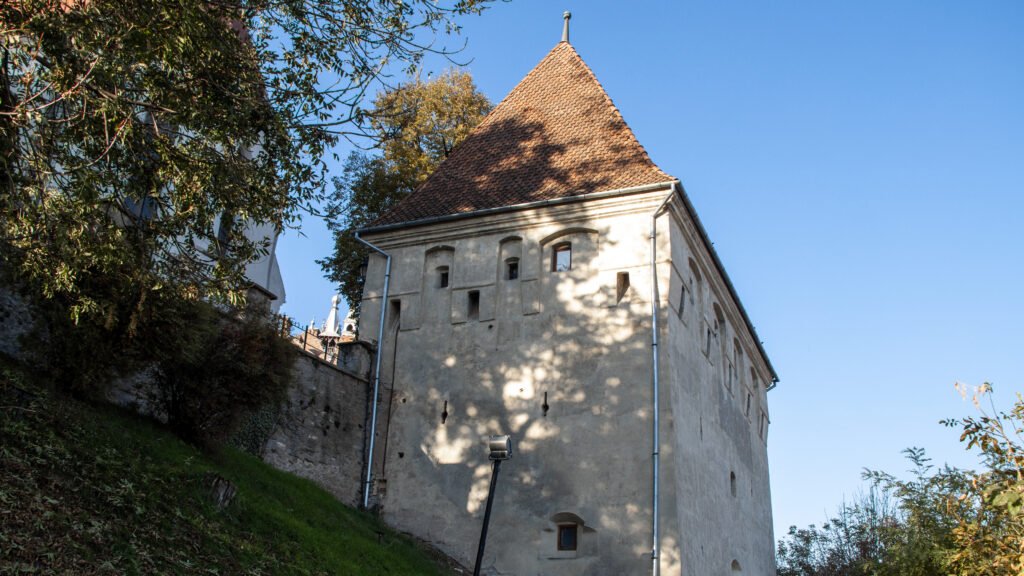
There were once 14 defensive towers in Sighisoara, but only nine are left standing. Many of these towers were associated with guilds who had the responsibility of maintaining and defending their part of the fortifications. The Clock Tower is the most famous, but some of the other towers are still very impressive to see, and they provide a unique look into the medieval town’s history.
The Tailors’ Tower still forms an entrance to the citadel, so I’d say this is the main one after the Clock Tower. The Ropemaker’s Tower sits next to the Church on the Hill, and the Tinsmiths’ Tower is quite unusual in its appearance. There’s no longer a continuous walkway connecting the towers, so you’ll pass by them as you make your way around the citadel. This makes it very easy to add all nine towers to your list of things to do in Sighisoara, though some are less eye-catching than others.
11. Walk down Strada Octavian Goga
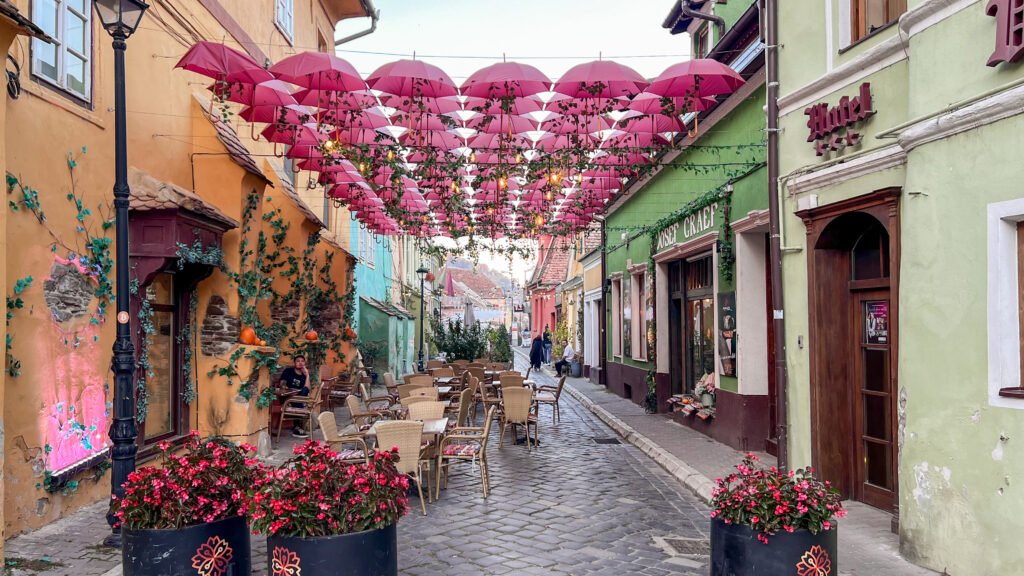
While spending a day in Sighisoara, try to take an hour or two to walk around the lower town, the newer part of the city. We didn’t have a lot of time to do this, but we did manage to see Strada Octavian Goga. This street is popular thanks to its colourful umbrellas suspended overhead. There are several restaurants located in this area, too. Besides this street, it’s worth walking around the lower town to see how the city expanded beyond its citadel over the centuries.
If you’re planning to drive to Sighisoara, there’s an affordable outdoor parking lot at one end of Strada Octavian Goga. Arrive early to secure a spot, or later in the day when most of the visitors have left, as the parking lot isn’t very big but the location is perfect.
12. Admire Sighisoara at night
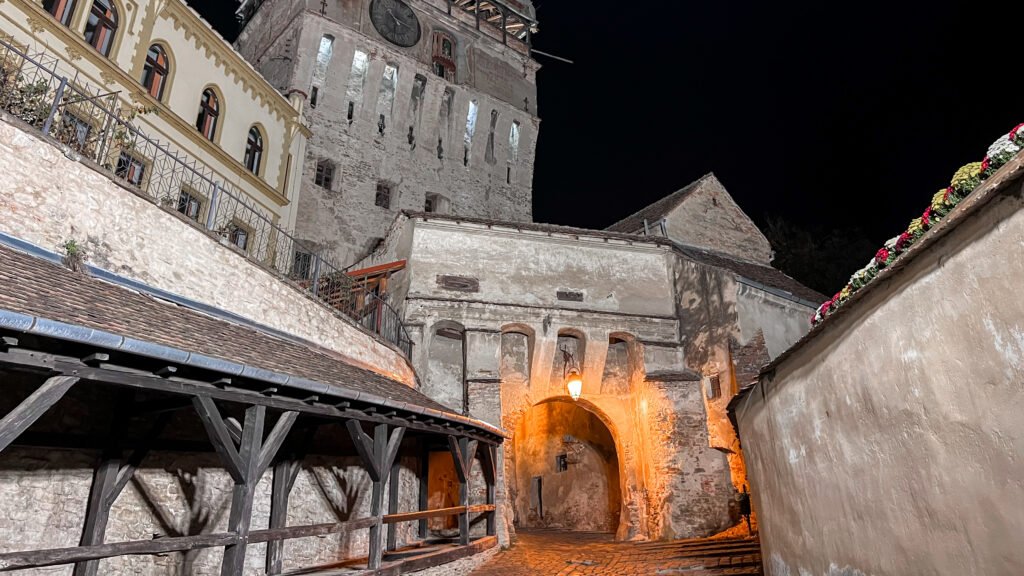
Since we arrived later in the afternoon, we were able to enjoy Sighisoara at night. The historic citadel takes on a completely different atmosphere after the tour groups have left and the shops have closed for the evening. The streets are illuminated by lamplight and the main buildings look like something from an old drawing or painting. It’s nice to walk back to some of the places you saw in the daytime so you can appreciate them in a quieter setting. This is also a good reason to stay overnight, if your schedule will allow it.
Depending on the time of year, you may even be able to join an evening walking tour of Sighisoara, which no doubt highlights the city’s ties to Dracula as well as other interesting pieces of its dark history. Taking a short stroll in the evening is a great way to finish your day in Sighisoara.
Where to eat in Sighisoara
Gasthaus Alte Post

Although most of your time will be spent in the upper town, I wouldn’t recommend eating there. Locals will suggest eating in the lower town, which is exactly what we did. Just a short walk from the Clock Tower is Gasthaus Alte Post, which is housed in a former post office. It combines its historic setting with Romanian cuisine, making it the perfect place to eat in Sighisoara after a full day of walking. We tried a couple of traditional dishes, including smoked aubergines, and were very happy with the portion sizes and prices. Gasthaus Alte Post is also conveniently located next to Strada Octavian Goga.
Is Sighisoara worth visiting?
Sighisoara is often said to have the most beautiful and authentic old town in Romania, so it’s worth visiting if you enjoy history, colourful streets, and medieval architecture. Its compact citadel means that all the things to do in Sighisoara can easily be seen in a day, but staying overnight will allow you to explore it at a slower pace. Sighisoara also fits in perfectly with a road trip in Romania when combined with visits to Sibiu, Brasov, and Cluj-Napoca. If you’re looking to extend your travels further west, Timisoara is worth seeing, too, and offers a different side of the country to admire.
If you have any questions about things to do in Sighisoara or places to visit in Romania, please don’t hesitate to reach out. You can get in touch via email or through the contact form on my website. Don’t forget to follow along with my travels on Instagram and TikTok as well, where you’ll find more ideas about where to plan your next trip.
This post may contain affiliate links, which means I may earn a commission from the discount codes used or when a link/ad is clicked. All purchases made will come at no extra cost to you, and I only include products and services that I would personally recommend.
Pin this blog post for later!