
Planning a trip to the Norwegian capital is always a great idea, whether you’re visiting for the waterfront saunas, its history, or an event. It’s one of the most underrated cities in Scandinavia, but once you arrive, you’ll quickly see why so many people who visit can’t wait to return. Part of what makes Oslo such a great destination is its abundance of museums. There are over 50 museums in Oslo to explore, and while some are more popular than others, the smaller museums are equally worth adding to your Oslo itinerary.
Visiting several museums in Oslo during your time here can be costly, but there’s a smart way to do it. The Oslo Pass gives you either free or discounted entry into a large majority of Oslo’s main attractions. You’ll also have access to unlimited public transport, making it the perfect pass to have on hand if you’re museum-hopping. There are a lot of incredible museums in Oslo to choose from, and here are my top picks to get you started.
9 museums in Oslo to visit
1. MUNCH Museum
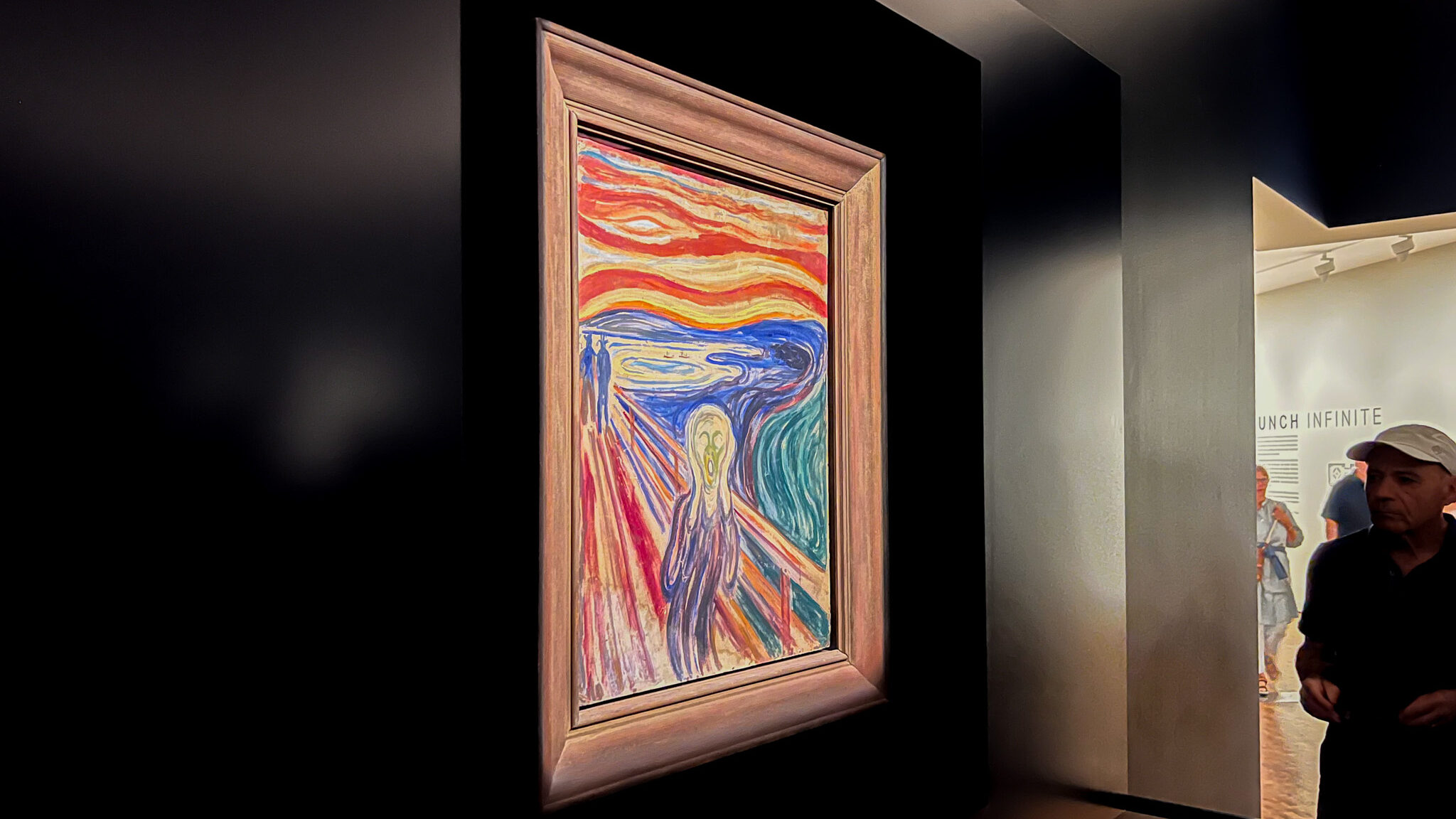
One of the best museums in Oslo is the MUNCH Museum. It’s located in the Bjørvika district, along the city’s scenic waterfront, in a recently-built contemporary structure. This is where you’ll find the largest collection of works by Edvard Munch, including variations of The Scream. If you’re intending to visit solely for this artwork, you may have to wait a while to see the most iconic version, as it rotates with two other variations every 30 minutes.
As you walk around the museum, which is comprised of different floors, you’ll also come across Munch’s photographs, sketches, and personal effects that provide insight into the life of the artist. Even if you’re not an art enthusiast, this museum in Oslo is definitely worth visiting.
Entry fee: 220 NOK/€20
2. The Norwegian Museum of Cultural History
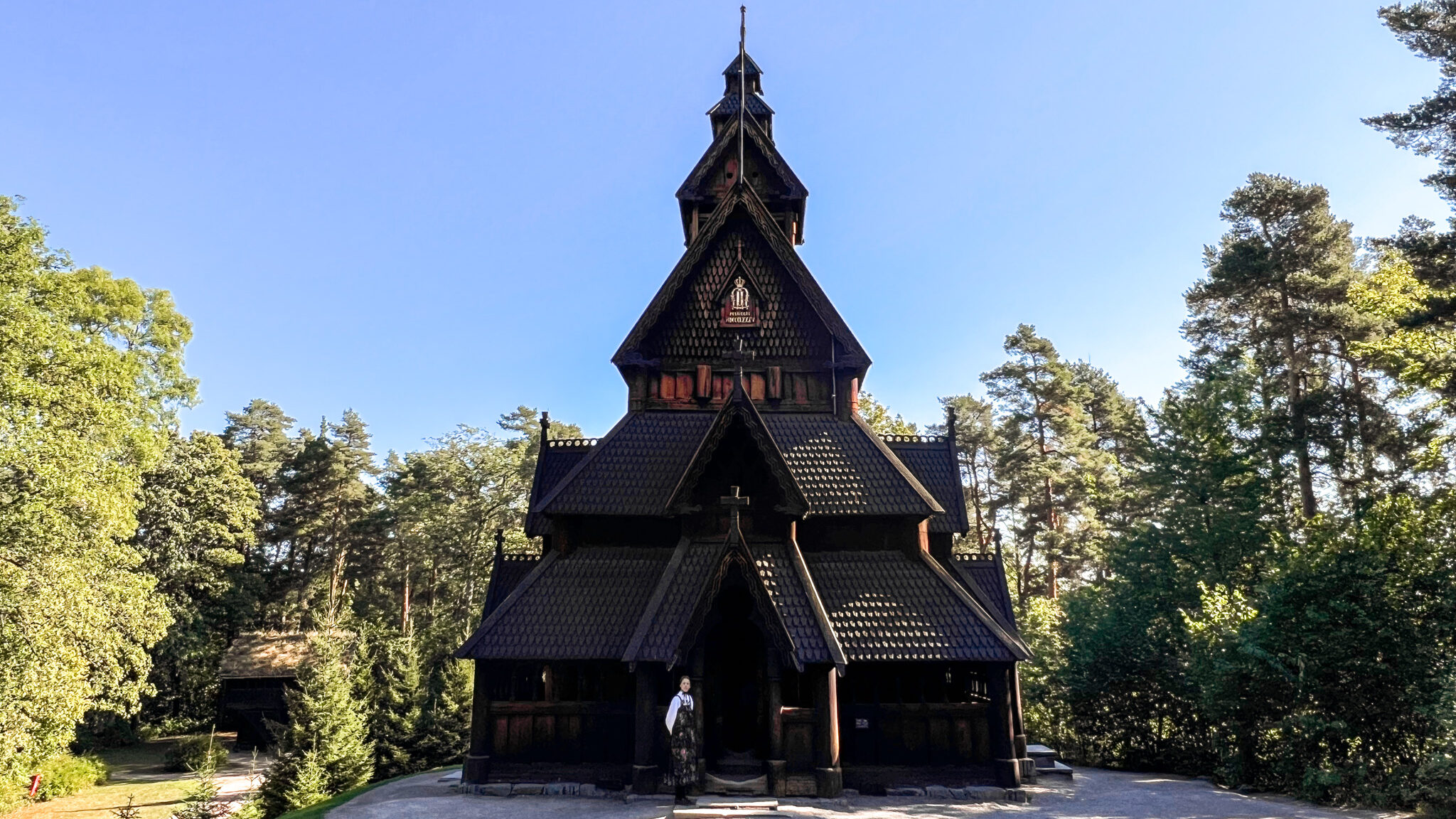
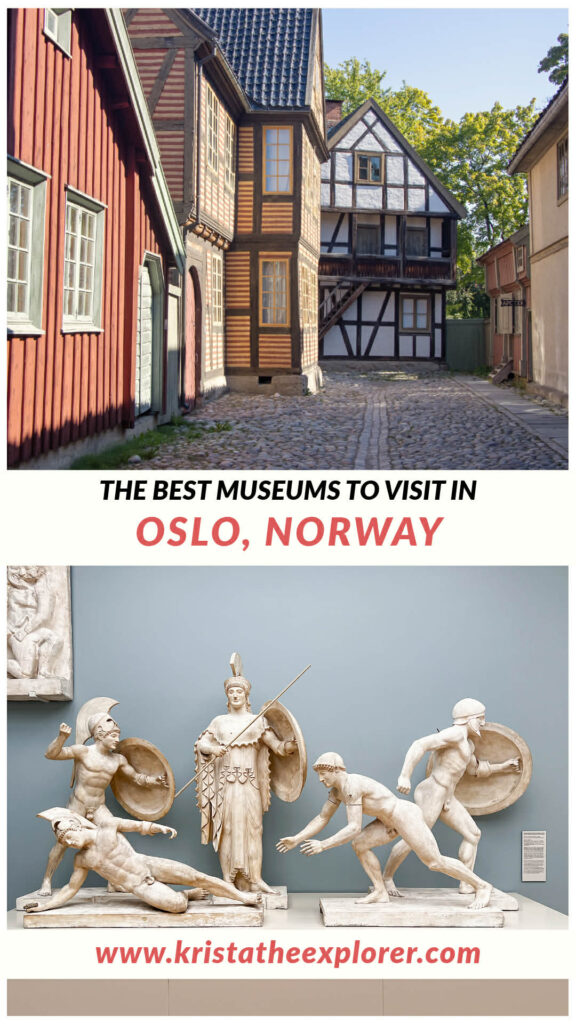
If you only have time to visit one of the many museums in Oslo, make sure it’s the Norwegian Museum of Cultural History (Norsk Folkemuseum). This is one of the largest open-air museums in Europe, with over 150 historic buildings on display that were relocated from other parts of Norway. One of the most iconic buildings is the Gol Stave Church, which dates back to the 13th century.
Walking through the Norsk Folkemuseum is like taking a walk back in time. You’ll experience everything from urban Norwegian culture to rural farm life across the centuries. In the summer months, there are staff walking around in traditional dress, which really brings everything to life. This is a great museum to take photos at too, as each building and street is completely different from the next.
Entry fee: 200 NOK/€18
3. Nobel Peace Center
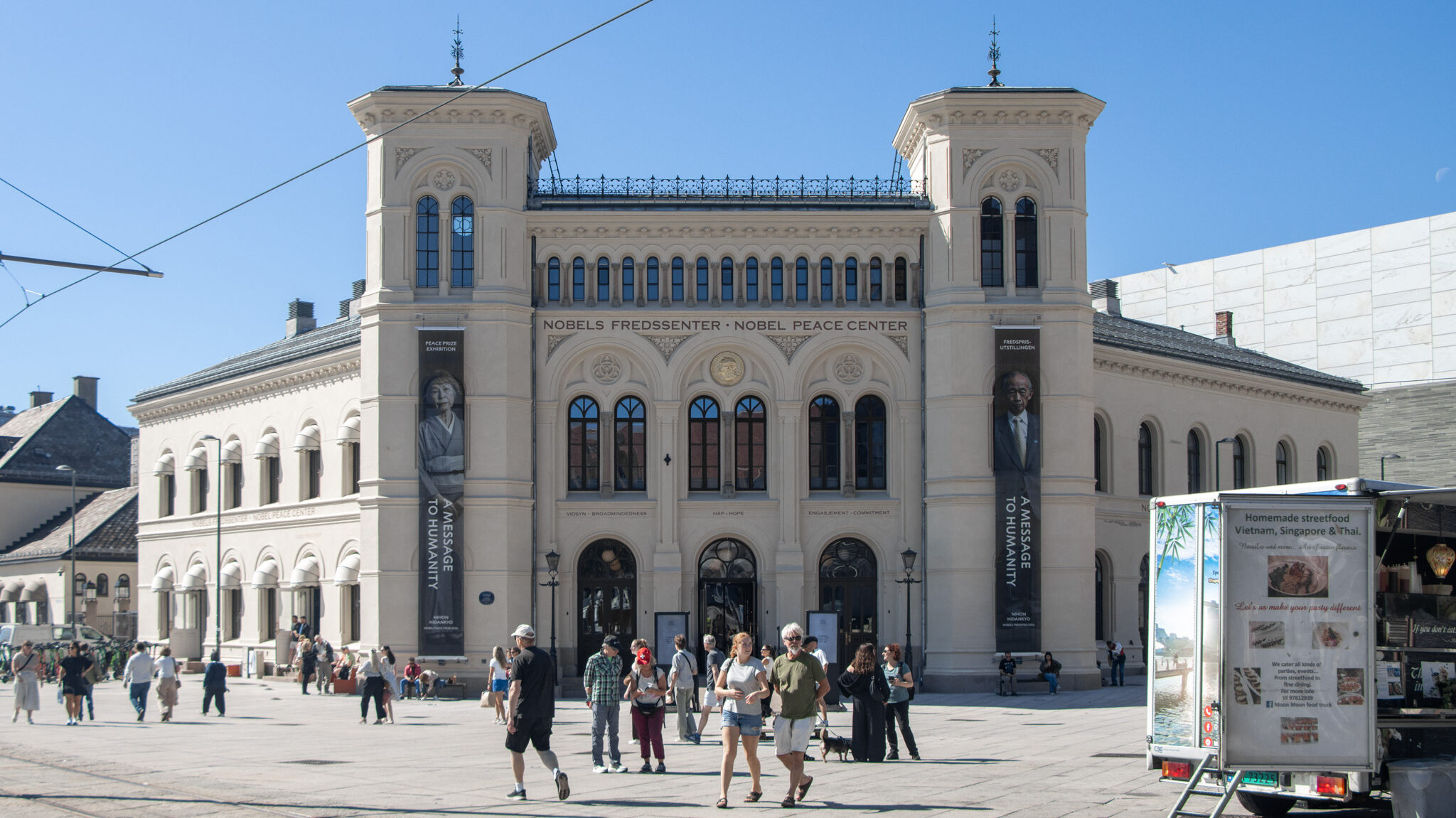
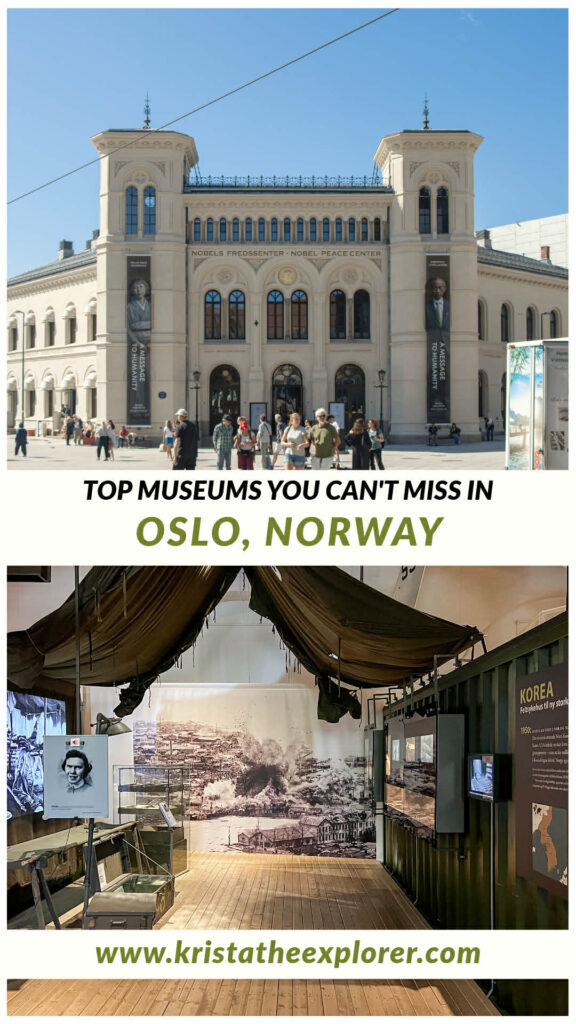
You don’t need to travel far to find some of the best museums in Oslo. The Nobel Peace Center is located along the harbourfront, near Oslo City Hall. It’s a museum that celebrates the legacy of the Nobel Peace Prize and the people who have shaped global peace efforts. Inside, you’ll find a mixture of interactive exhibits and multimedia displays that highlight past laureates and ongoing work. It’s very inspiring to walk around, and you won’t need to spend too long here, which is a bonus if you’re only spending a weekend in Oslo.
If you’ve visited Stockholm in the past, you may have come across the Nobel Prize Museum, which covers all Nobel disciplines and is equally worth taking the time to explore.
Entry fee: 180 NOK/€16
4. Norwegian Armed Forces Museum
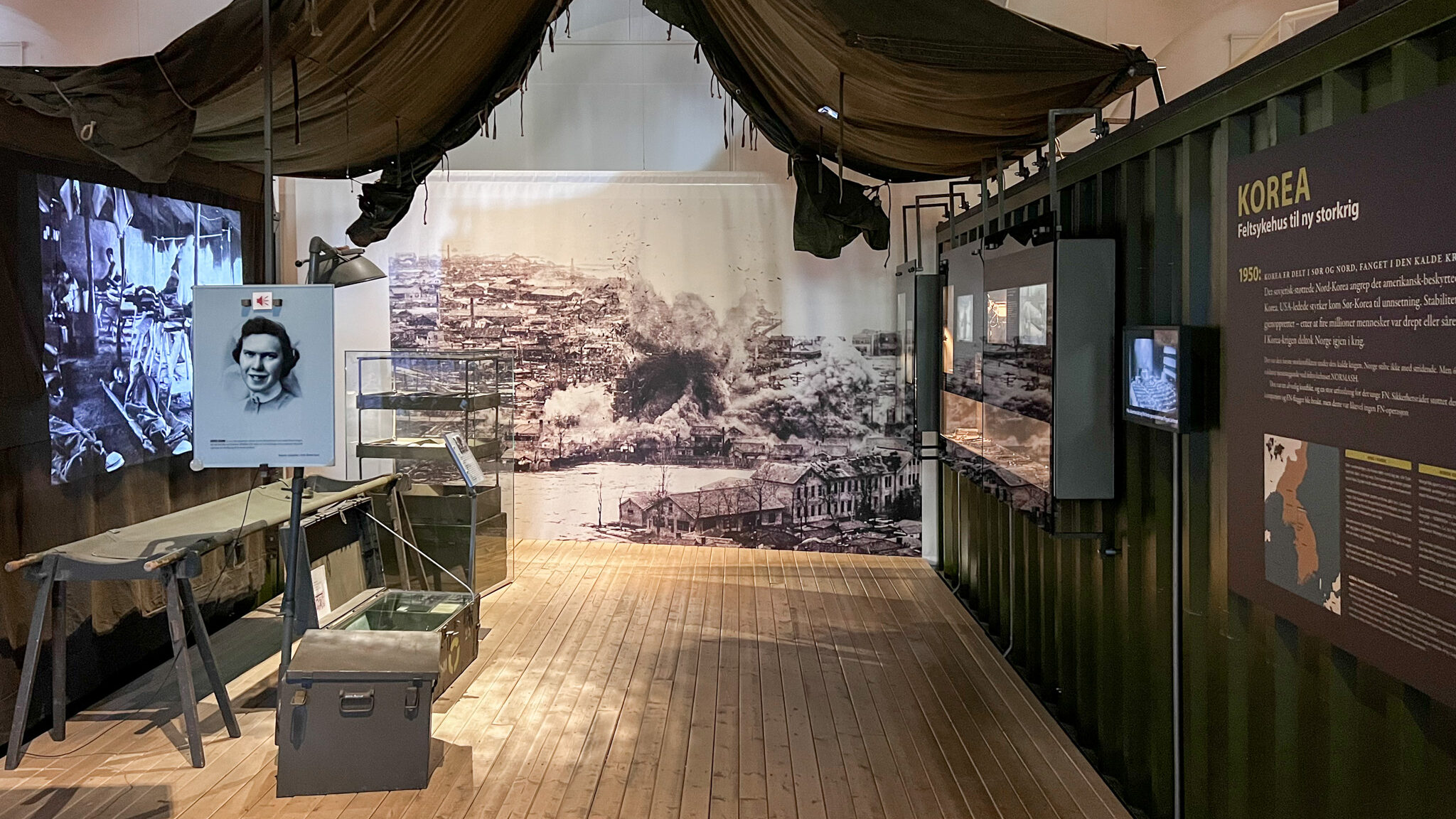
Walking around the historic Akershus Fortress is a must in Oslo. Located inside the fortress is where you’ll find the Norwegian Armed Forces Museum. This unique museum takes a look at the military history of Norway, from the Viking Age up to the 21st century. Visitors can learn more about the key conflicts the country has faced as well as its defense strategies through detailed exhibits and displays.
It’s the perfect stop for history enthusiasts, and one of the best things about it is that entry is free throughout the year. When we visited the museum, it wasn’t very busy as most visitors stayed within the main building of the fortress itself. It’s a short walk from the main entrance to find the Norwegian Armed Forces Museum, but there are signposts everywhere to help you out.
Entry fee: Free
5. Norway’s Resistance Museum
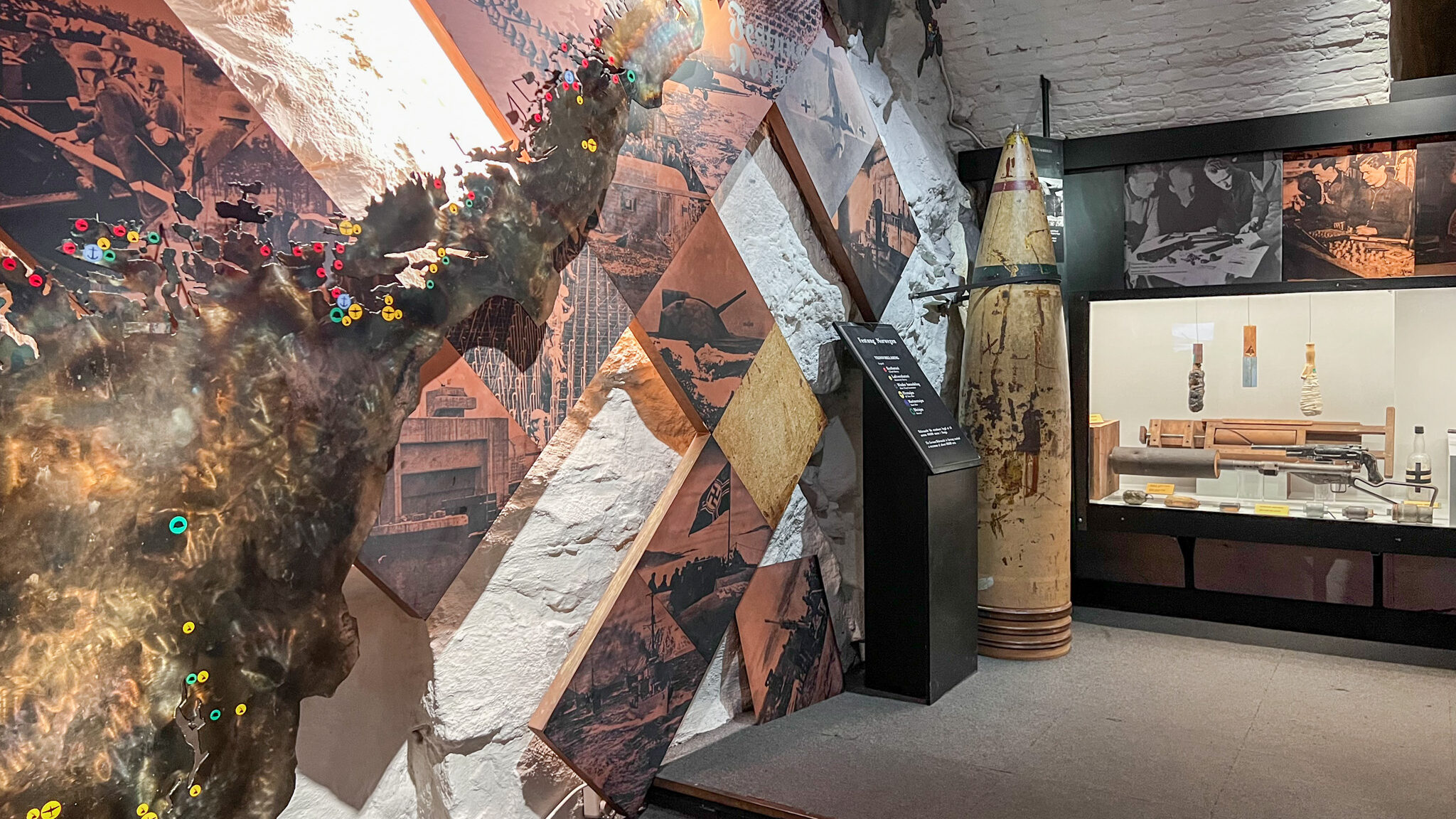
Akershus Fortress gets a lot of attention, but many people fail to realize that there are some museums in the grounds, too. One of these is Norway’s Resistance Museum, which focuses on the country’s experience during World War II. The exhibition inside is very powerful, showcasing artifacts, personal stories, and photographs that tell the story of Norway’s resistance movement against the Nazis.
This is one of the most underrated museums in Oslo, and although it’s small, it’s very impactful. It’s worth visiting to gain a greater understanding of this period in Norway’s history and to see a more personal perspective on the resistance movement.
Entry fee: 160 NOK/€14
6. National Museum
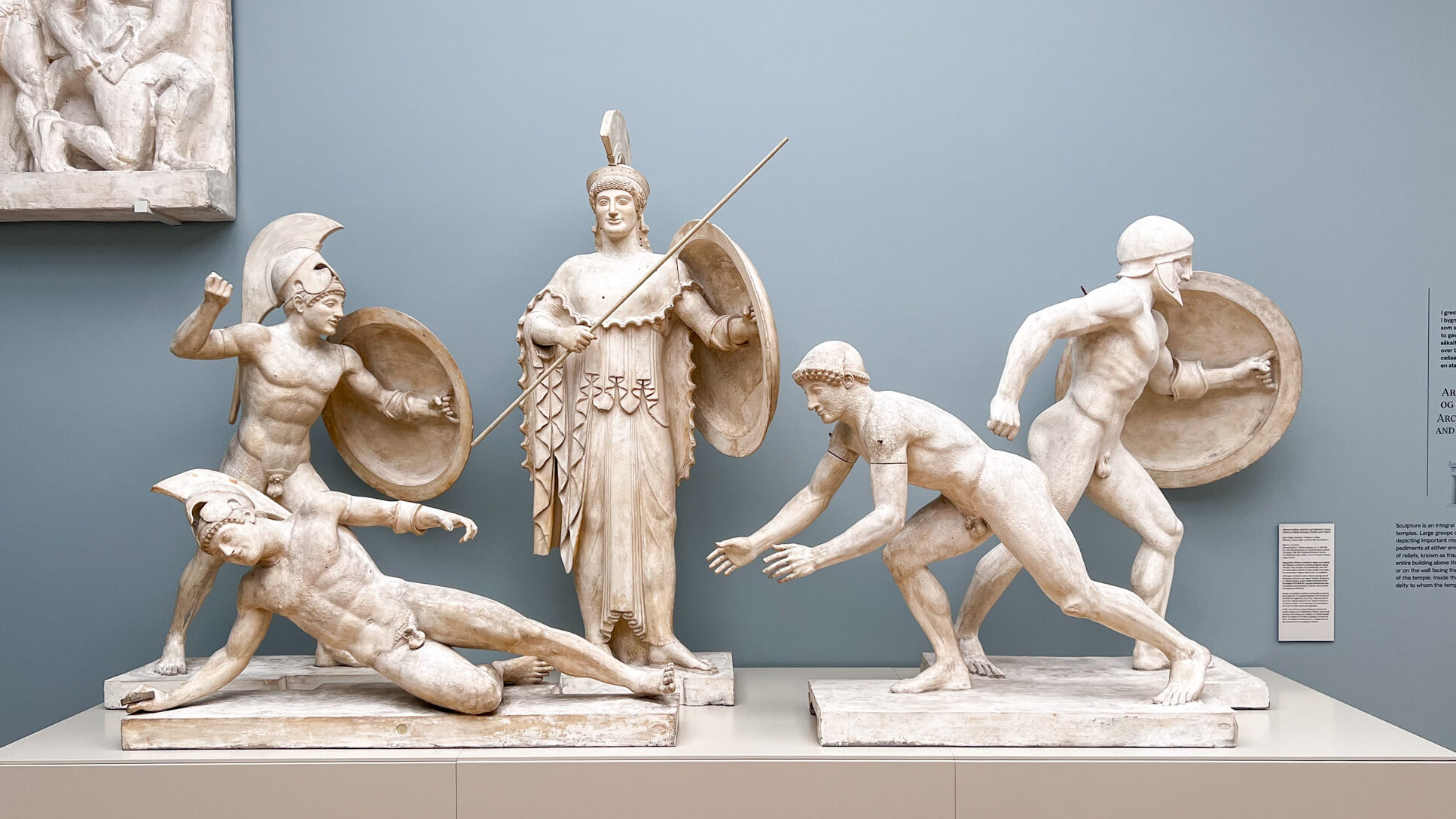
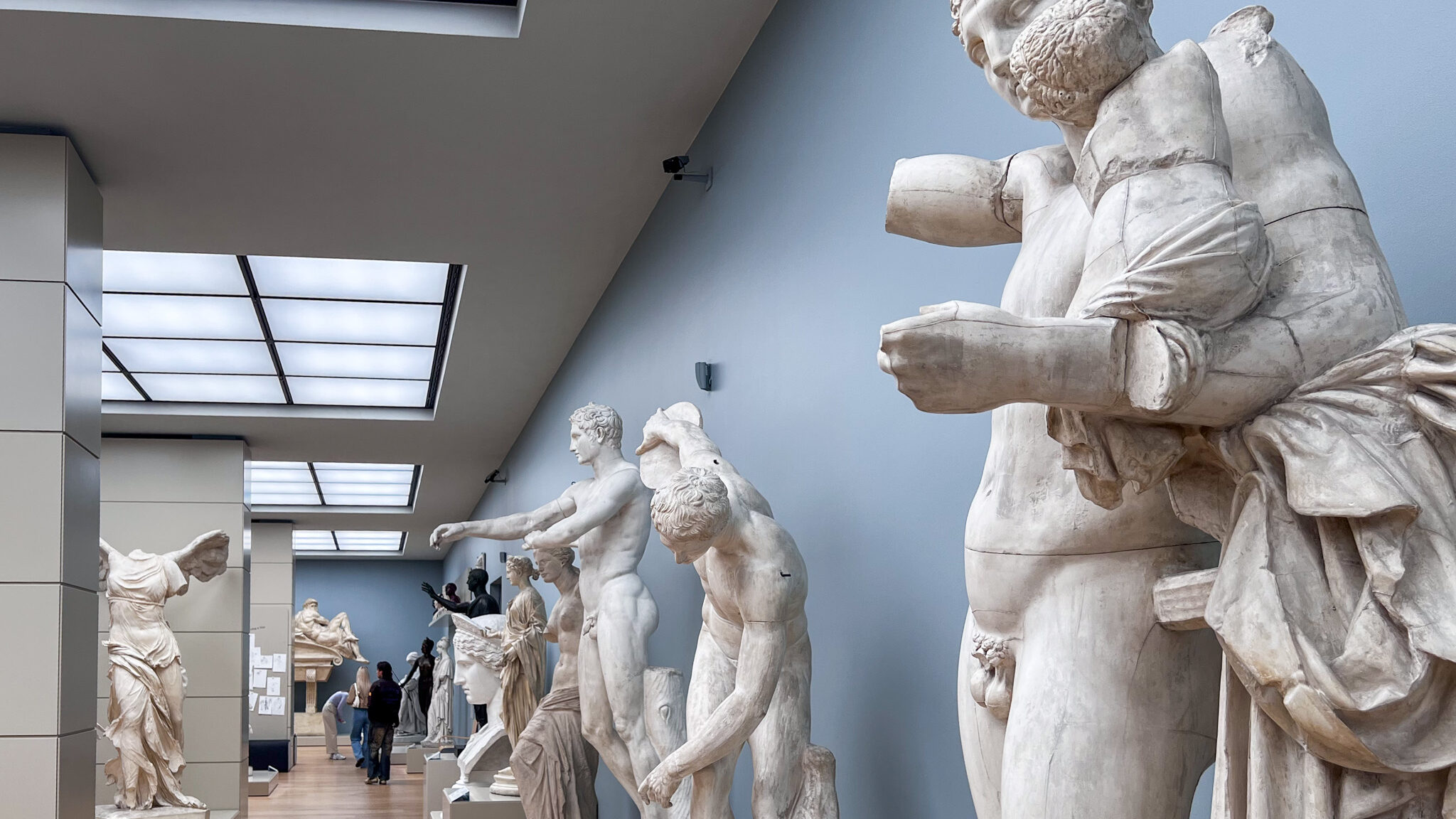
Not far from the Nobel Peace Center sits the largest museum in Norway – the National Museum. This is a must-visit for design and art lovers. The museum brings together collections of architecture, fine art, and decorative arts, including another version of The Scream by Edvard Munch. The National Museum is enormous, and the spacious galleries make it easy to explore at a leisurely pace. There’s a lot to see inside the museum, so if this is one of your main reasons for coming to the city, I’d recommend spending a minimum of three hours inside.
If you’re looking for souvenirs in Oslo, there’s a great store at the entrance to the museum selling a wide selection of Norwegian handmade goods.
Entry fee: 200 NOK/€18
7. Holmenkollen Ski Museum
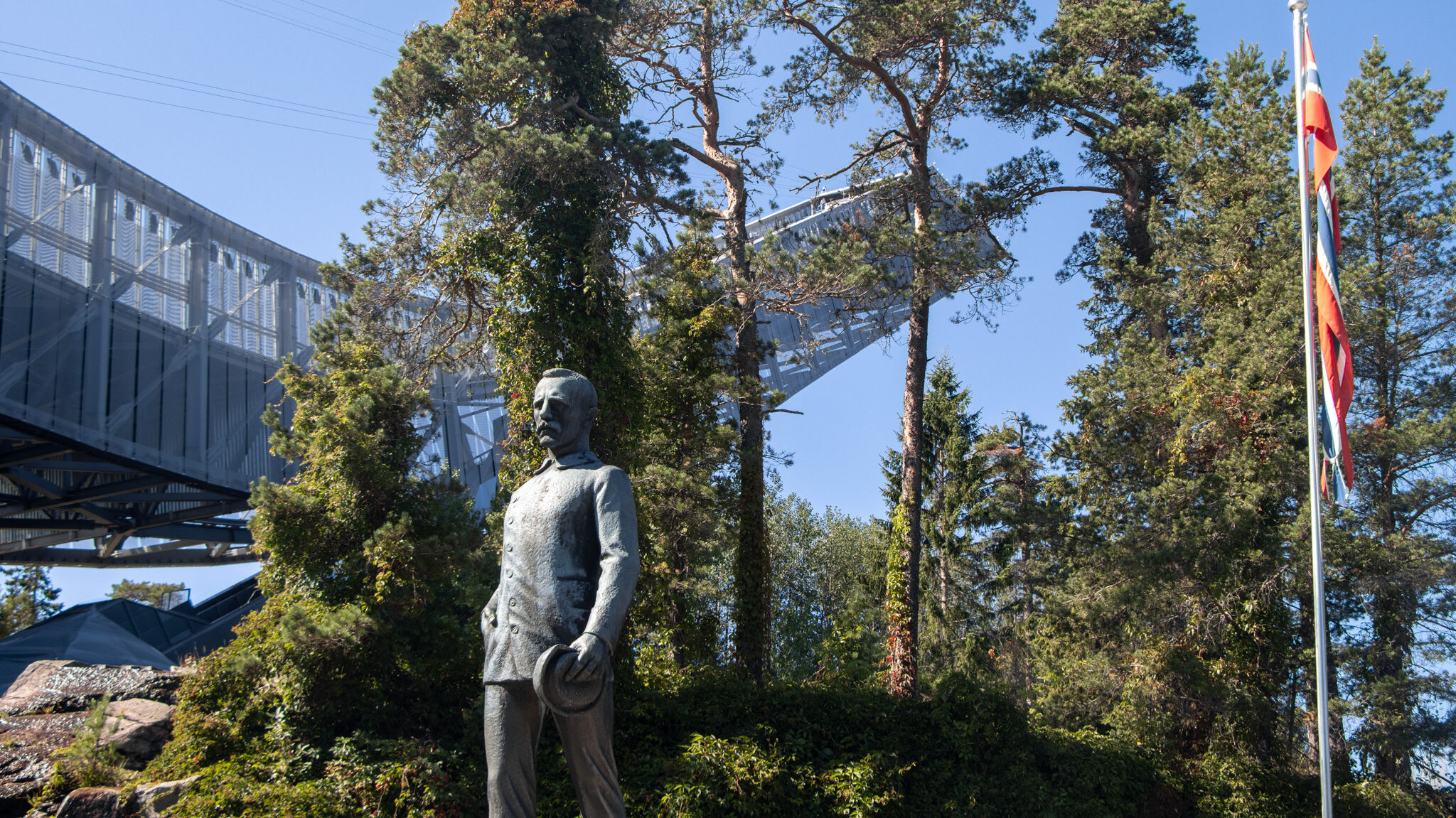
There may be a lot of museums in Oslo to choose from, but none of them are quite as unique as the Holmenkollen Ski Museum. It’s perched high above the city, offering beautiful panoramic views over Oslo and the Oslofjord. This museum is one of the oldest in the world dedicated to skiing, and its exhibitions tell the history of the sport over a timespan of 4,000 years.
From ancient ski equipment to modern Olympic gear, there’s a lot of information to take in, and some of the displays are fascinating. To add some fun to the mix, there’s even a ski simulator visitors can try. If you’re feeling brave, after exploring the exhibitions in the museum, you can take the lift up to the top of the ski jump, where you’ll be met with unbeatable views.
Entry fee: 180 NOK/€16
8. Fram Museum
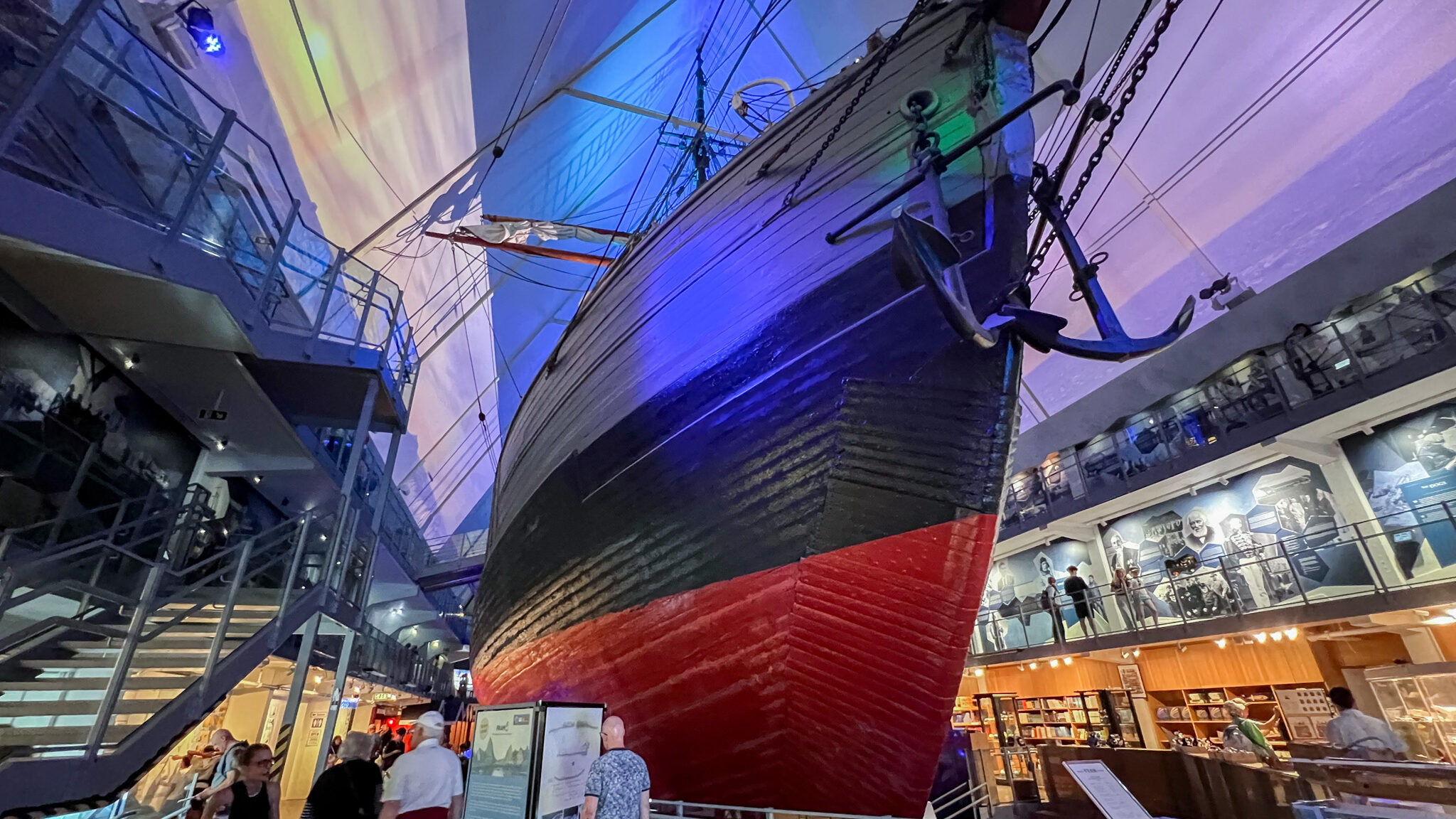
Some of the most popular museums in Oslo can be found on the Bygdøy peninsula, easily accessible by boat or bus. Sadly, the Viking Ship Museum was closed for restoration when we visited, so instead, we explored the Fram Museum.
It’s a unique museum that’s built around the polar exploration ship Fram. As well as display cases along the outside of the ship, visitors can step aboard and explore it up close. It’s an engaging experience for people of all ages, and the interactive exhibits about Antarctic and Arctic expeditions offer something a little different than regular museums. If you’re already visiting this part of Oslo, I’d highly recommend spending an hour inside the Fram Museum.
Entry fee: 180 NOK/€16
9. IBSEN Museum & Theatre
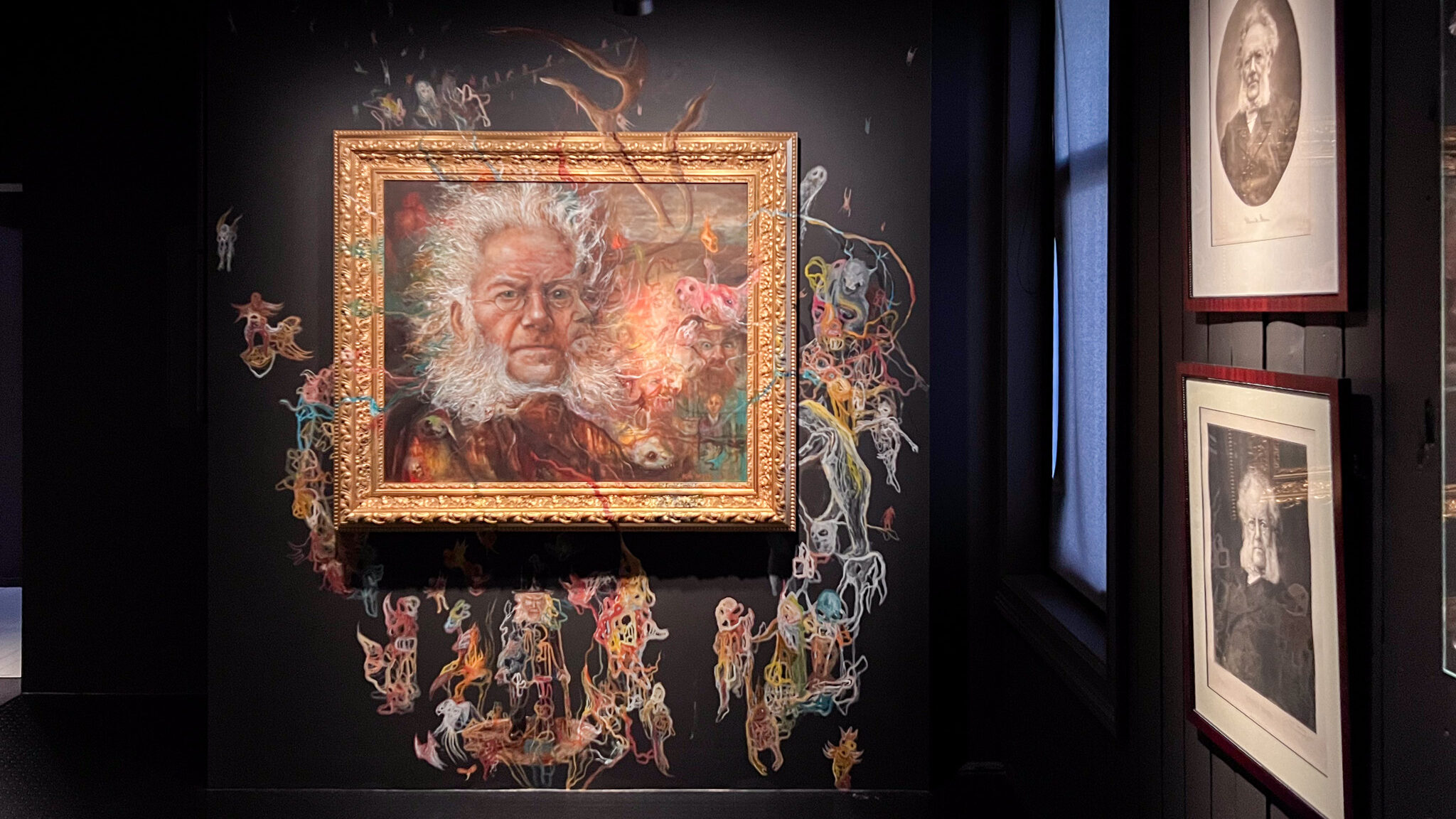
In the centre of Oslo, a short walk from the harbourfront, is where you’ll find the IBSEN Museum and Theatre. It’s dedicated to the life and work of Henrik Ibsen, who was one of the most influential playwrights in modern drama. What’s interesting about this museum in Oslo is that it’s set inside his former apartment, which has been beautifully preserved to reflect how he lived and worked.
This is one of the smaller museums in Oslo that you’ll come across, so you’ll have a much more intimate experience. Because of this, it’s recommended that you book a timeslot in advance, as the apartment space requires a guided tour to access. There’s a small exhibition before you enter the apartments, though, that you can visit without a guide.
Entry fee: 195 NOK/€17
Where to stay in Oslo
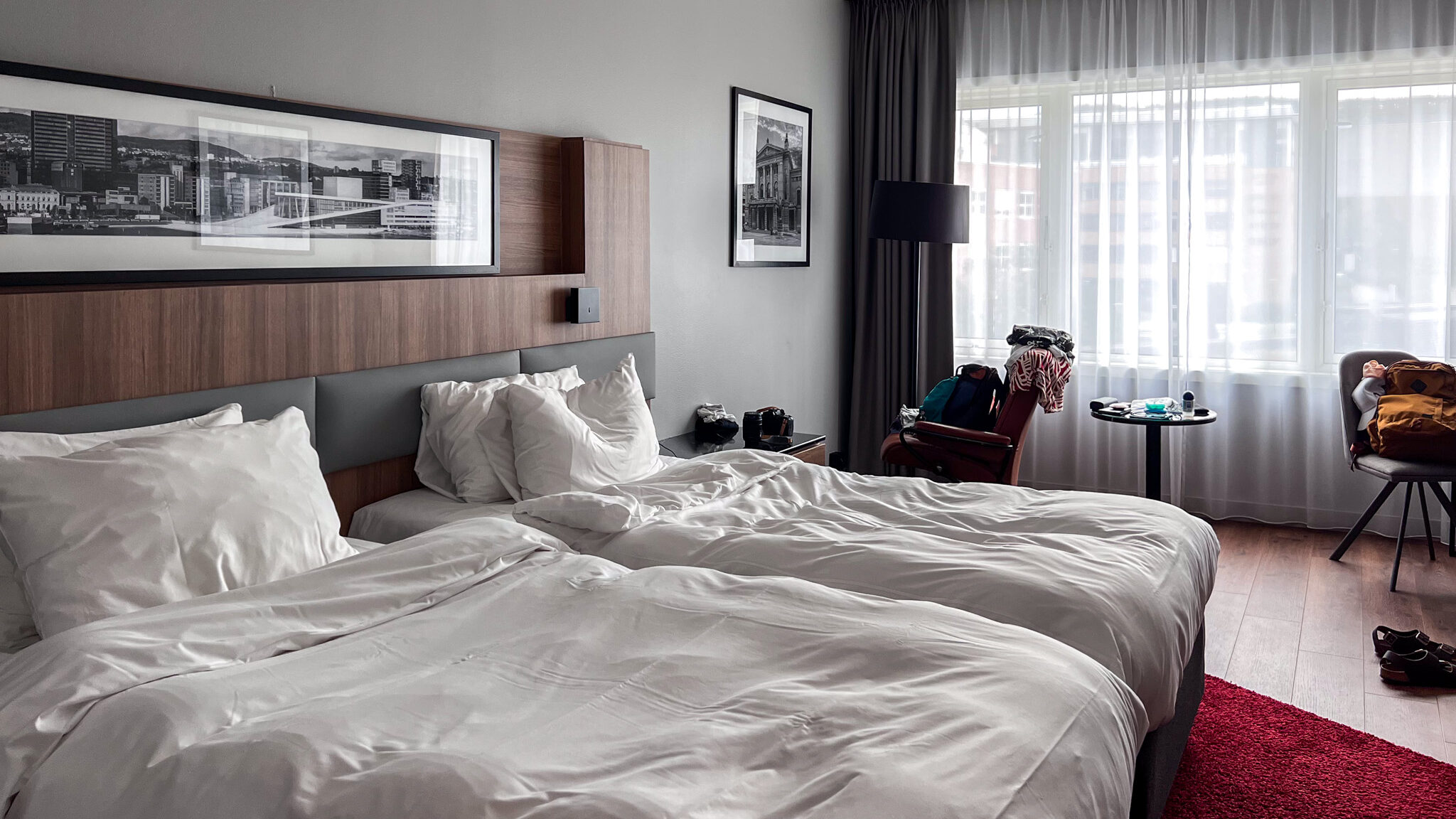
Choosing where to stay in Oslo can have a big impact on what remains of your budget. Oslo isn’t the cheapest city to stay in, but that doesn’t mean there aren’t some great deals in well-located neighbourhoods.
Budget-friendly options like CityBox Oslo are great if you want a simple, modern base that’s in the city centre. For something a little more upscale, the Radisson Blu Nydalen balances value with comfort, and it’s located just a short metro ride from the main attractions. Both of these hotels in Oslo offer a comfortable place to recharge after exploring some museums in Oslo, but without a hefty cost attached.
When is the best time of the year to visit Oslo?
For most people, visiting Oslo in late spring through to early autumn is the best time to visit the city. This is when you’ll have more daylight hours, better temperatures, and outdoor events taking place. Museum-hopping during this time of the year is more enjoyable too, as you can walk along the harbourfront or the streets of the historic centre in nicer weather. However, if you’re drawn to winter sports and colder settings, the wintertime can be equally as enjoyable, and you can use the museums in Oslo as places to warm up before continuing your tour of the city.
If you have any questions about planning a trip to Oslo, which museums in Oslo to prioritize, or free things to do in Oslo, please get in touch. You can reach out via email or through the contact form on my website. Don’t forget to follow my travels on Instagram and TikTok, too, where you’ll come across more helpful travel tips and ideas about where to plan your next trip.
This post may contain affiliate links, which means I may earn a commission from the discount codes used or when a link/ad is clicked. All purchases made will come at no extra cost to you, and I only include products and services that I would personally recommend.
Pin this blog post for later!